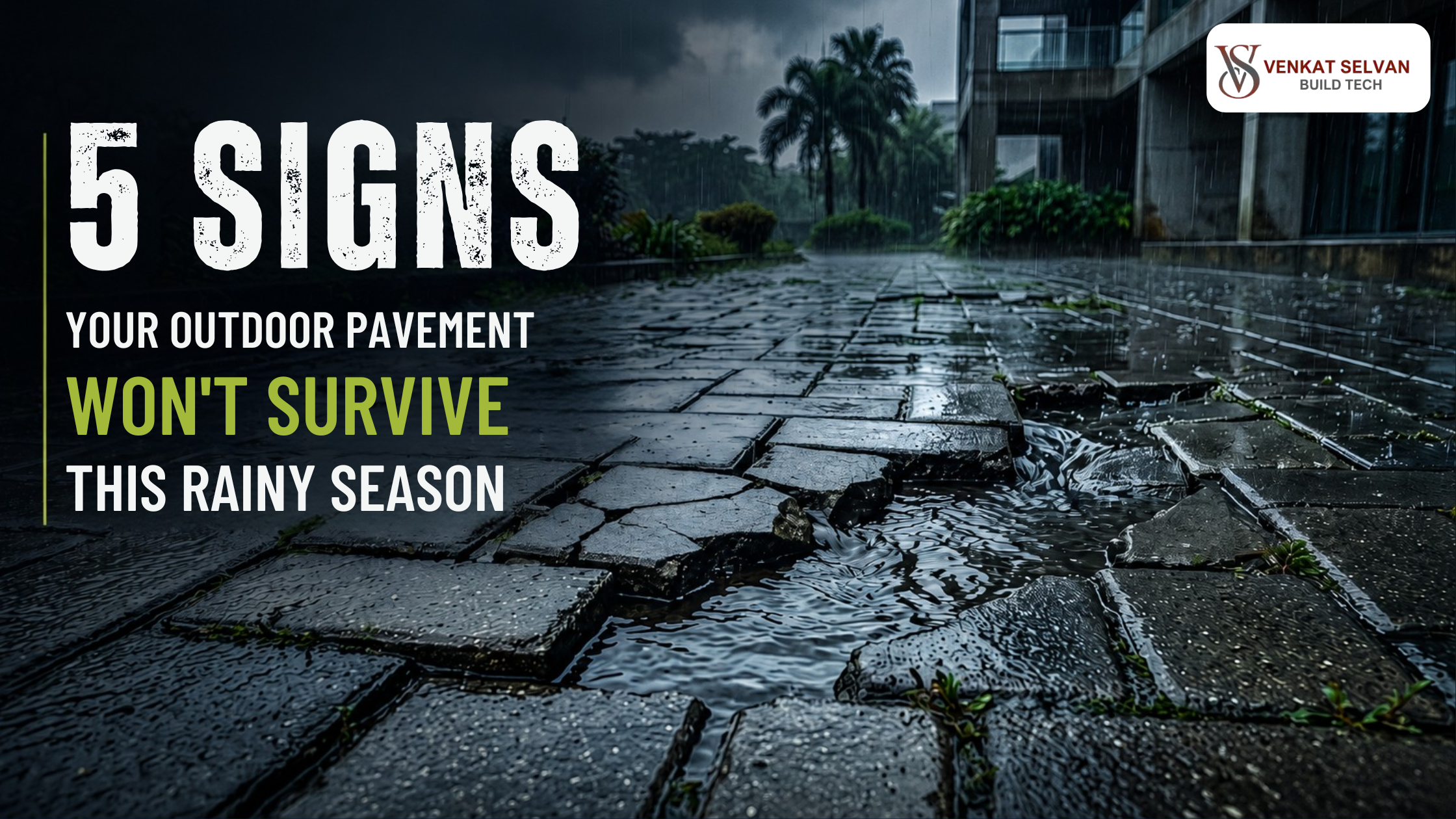
Every year, the monsoon season brings much-needed rainfall, but it also exposes weaknesses in outdoor pavements, driveways, parking areas, and walkways. What may seem like a minor crack or a small drainage issue during summer can quickly turn into a costly repair project once heavy rains arrive.
Understanding the early warning signs of monsoon pavement damage can help property owners, builders, and facility managers take preventive action before the problem worsens. Whether it’s a residential driveway, a commercial parking area, or a public walkway, identifying these signs early can save both time and money.
1. Cracks Are Becoming More Visible
Cracks are one of the earliest indicators of pavement deterioration. While small cracks may appear harmless, they often allow rainwater to seep beneath the surface.
When water enters these cracks during the monsoon, it gradually weakens the base layer supporting the pavement. Over time, the cracks expand, resulting in surface damage and structural instability.
Common Warning Signs:
- Hairline cracks spreading across the surface
- Wider cracks near pavement edges
- Small sections beginning to chip away
Addressing cracks before the rainy season can significantly reduce the risk of extensive monsoon pavement damage.
2. Water Remains on the Surface After Rain
A well-designed pavement should allow water to drain efficiently. If water continues to collect on the surface long after rainfall has stopped, it may indicate poor drainage or an uneven pavement structure.
Standing water is more than just an inconvenience. It can gradually weaken the pavement, encourage surface erosion, and increase the likelihood of slips and accidents.
Look Out For:
- Water pooling in specific areas
- Puddles that remain for several hours
- Visible drainage issues around pathways and parking spaces
Proper drainage planning is one of the most effective ways to prevent pavement damage during the monsoon season.
3. The Surface Has Become Uneven
Uneven pavements are often a sign that the foundation underneath has started to weaken. During periods of heavy rainfall, water can wash away or loosen the supporting base material, causing certain sections to sink or shift.
An uneven pavement not only affects appearance but can also create safety hazards for pedestrians and vehicles.
Common Indicators:
- Noticeable dips or depressions
- Raised sections or bumps
- Difficulty driving or walking smoothly across the surface
Ignoring these signs can lead to more severe structural problems over time.
4. Paver Blocks Are Loose or Shifting
For paved areas using interlocking blocks, loose or shifting blocks are a clear warning sign that maintenance is needed.
Heavy rain can gradually erode the bedding layer beneath the blocks, reducing stability and causing movement. If left untreated, the problem can spread across larger sections of the pavement.
Warning Signs Include:
- Blocks moving when stepped on
- Gaps forming between blocks
- Broken or chipped paver edges
- Uneven block alignment
Replacing damaged blocks and restoring the base layer can help maintain the strength and appearance of the pavement.
5. Repairs Are Becoming More Frequent
If you find yourself repeatedly fixing the same pavement issues, it may indicate that the existing surface is no longer capable of handling seasonal weather conditions.
Frequent repairs often signal deeper structural concerns that simple patchwork cannot solve.
Signs of Ongoing Deterioration:
- Recurring cracks
- Repeated patch repairs
- Increasing maintenance costs
- Surface damage returning after every rainy season
Investing in quality paving materials and proper installation methods can provide a more durable long-term solution.
How to Reduce Monsoon Pavement Damage
Preventive maintenance is always more cost-effective than major repairs. Before the rainy season begins, consider the following steps:
- Inspect pavements for cracks and damage
- Ensure drainage systems are functioning properly
- Replace damaged or loose paving blocks
- Repair uneven surfaces promptly
- Choose high-quality paving products designed for durability
- Schedule regular maintenance checks
These simple measures can significantly extend the lifespan of outdoor pavements and reduce future repair expenses.
Why Quality Paving Materials Matter
The performance of any pavement during the monsoon largely depends on the quality of materials used. Well-manufactured paver blocks, kerb stones, and other precast concrete products offer better strength, improved drainage management, and greater resistance to weather-related wear and tear.
For residential, commercial, and infrastructure projects, selecting reliable paving solutions can make a noticeable difference in long-term performance and maintenance requirements.
Conclusion
Monsoon pavement damage rarely occurs without warning. Cracks, water stagnation, uneven surfaces, loose paver blocks, and recurring repairs are all signs that your pavement may struggle to withstand heavy rainfall.
By identifying these issues early and taking corrective action, property owners can protect their outdoor spaces, improve safety, and avoid expensive repairs. A proactive approach today can ensure that your pavements remain strong, functional, and visually appealing throughout the rainy season and beyond.
Protect Your Pavements Before the Monsoon Arrives
Monsoon season-ku munnaadi outdoor pavements, parking areas, walkways, and landscaped spaces-ai inspect pannradhu future repair costs-ai kuraikka udhavum. Quality paving solutions choose pannina water stagnation, surface damage, and maintenance issues-ai considerably reduce panna mudiyum.
If you’re planning a new project or looking to upgrade existing outdoor spaces, Venkat Selvan Build Tech offers durable paving solutions designed to withstand varying weather conditions and deliver long-term performance.
📍 Chennai
📞 93445 25523
Whether it’s paver blocks, grass pavers, kerb stones, or other precast concrete products, the right materials can make all the difference in keeping your outdoor spaces safe, attractive, and monsoon-ready.
Contact Venkat Selvan Buildtech today to find the ideal paving solution for your next project.
“Investing in quality paving materials today is the smartest way to prevent costly monsoon pavement damage tomorrow.” 🌧️🏗️